akarakarabha :
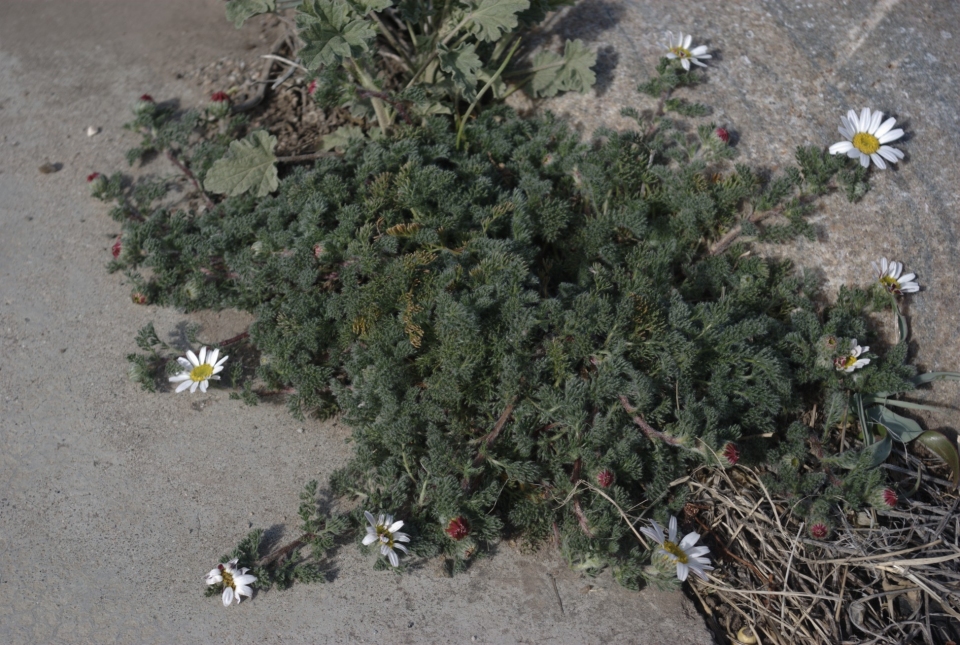 Anacyclus pyrethrum (pellitory, Spanish chamomile, or Mount Atlas daisy or Akarkara) is a perennial herb much like chamomile in habitat and appearance. It is in a different family (Asteraceae) from the plants known as pellitory-of-the-wall (Parietaria officinalis) and spreading pellitory (Parietaria judaica).
HISTORICAL AND MYTHOLOGICAL REVIEW:
This drug is used from thousands of year by Unani physicians, Dioscorides (1st century), Jalinus (131-210 AD), Ibn Sina, Ishaque bin Imran, Abu Marwan bin Zohar (Avenzoar), mentioned this herb in their book. Ainslie, speaking of pellitory root notes that this root is to be found in most of the Indian market; though I cannot learn that plant grew in any part of India and told that it is a native of Arab, Syria, and Bohemia, and it is no doubt from the first mentioned of these countries that it is brought to Hindustan, an export from mocha (Makka) . In Brihatrayees period the drug Aqer Qerha (Anacyclus pyrethrum D.C.) is not to be found in any Vedic period books like, Charaka Samhita, Susrutha Samhita, Astanga Sangraha, but only mentioned by the later writers in Laghutrayees period, such as Sarangdhara and the author of the Bhavaprakasha who have doubtless derived their knowledge of its properties from the Arabs who in their turn closely follow the Greeks
Sarangdhar, the author of Sarangdhar Samhita has mentioned Akarakarabha in Madhyama Khanda 7th & 10th chapter while mentioning the preparation of Akarakarabhadi churna & Kumaryasava respectively. Bhava Prakash: Author has mentioned this drug in 59th chapter as an ingredient of sapta shali vati. Madhava Nidana has not mentioned about Akarakaraabha anywhere. And later, in Nighantu Period the authors described the synonyms properties & action and indications of the drug in different Nighantu like Haritakyadi Nighantu, Nighantu Ratnakara, Nighantu Adarsha and Priya Nighantu 8. It is considered to be Arab origin, it is mentioned in Arabian Nights under the name Ukhowan, 9 and probably Unani Hakeems brought it to India .
According to Pliny, it was the herb used by the Magians under the name parthenium against intermittent fever, and according to Dioscorides, it is the plant that, under the name of anthemis, was used under the same manner. According to De Candole its introduction into Britain was perhaps before the coming of Romans, and was used there until this century to promote salivary flow and to relieve toothache. The European colonies carried it according to Josselyn to Northeast America before 1669 where it is to be found both under and having escaped from that place, as a wild plant . The only difficulty is that pyrethron is described by Dioscorides as an umbelliferous plant, but with properties of pellitory. Hakeem Najmul Ghani correctly notes in his book Khazainul Advia, that the pyrethrum of Dioscorides resembling anethum is a drug which the Arabs call Ud el Kareh Jabli, very common in Syria (Sham), it is found at the upper part of Wady Pardah and he had also seen its fruit, it has a root about a span (angusht) in length, as thick as the finger, and has many of the properties of pyrethrum. He quotes Antaki as mentioning the kind of pyrethrum viz., African and also described by Ibn Baitar, and second is Syrian called Ud el kareh which is the root of Mountain Tarkhun and the kind described by Dioscorides.
Author of Makhzan said that tarkhun is an Arabic form of tukhun, the name of a plant common especially in Faras (Persia) and Shiraz (Iran). There are two kinds of Aqer Qerha wild and cultivated, it is propagated by seed and by cuttings and has a hot temperament, astringent and sweetish taste. If taken in fasting it numb the tongue, on this account it is chewed to cover the tastes of nauseous medicines. The root of the wild plant is called Aqer Qerha an Arabic name is derived from Aqer and Taqreeh, to mean causing a sore, 12 Selsus mentioned, it’s used for opening the mouth of wounds. The navigator Vasco da Gama, who had an impacted wisdom tooth, also carried it with him on his epic voyage. Today it is considered to be the most popular herb of India and Arab.
Galen mentioned this plant to treat brain disorders (amraze ra’as) as masticator and for body spasm (Ikhtelaje badan) Aqer Qerha oil used topically. Ibn Masvya used it as a gargle with sikanjbeen unsali for the evacuation of morbid matter form uvula and paste of Aqer Qerha in pista oil (roghan habbatul khazra) with another ingredient for the treatment of facial paralysis (laqwa) . Zakaria Razi used it as snuff (saoot) for the treatment of facial paralysis (laqwa), and also mentioned as an ingredient of Majoon Zabeeb for treatment of epilepsy
Taxonomical Classification
Kingdom: Plantae - Plants
Subkingdom: Streptophyta
Superdivision: Spermatophyta - Seed plants
Division: Magnoliophyta - Flowering plants
Class: Magnoliopsida - Dicotyledons
Order: Asteraless
Family: Asteraceae
Genus: Anacyclus
Species: Anacyclus Pyrethrum
Allied species:
Anthemis pyrethrum, Anacyclus officinarum, Matricaria officinarumVERNACULAR NAMES
Sanskrit: Akarkara,Agragrahi, AkarakarabhaEnglish: pellitory , Mount Atlas Daisy, Spanish Chamomile etc.
Hindi: Akarkara
Urdu: Aaqarqarha ﺋﺎﻗﺮﻗﺮﺣﺎ
Telugu: Akarakaram
Bengali: Aakarkara
Marathi: Akkalakara
Oriya: Akarakara
Gujarathi: Akkorakaro
Tamil: Akkirakaram
Malayalam: Akkikkaruka
Kannada: Aakala kaare
Punjabi: Akarkara
Arabic: Aquargarha
Spanish: Pelitre romano, Raíz de pelitre romano
Assamese: Kulekhara
Japanese: ア ナキクルス Anakikurusu, ア ナキクルス・ピレスルム Anakikurusu piresurumu, ピレトリウム Piretoriumu.
French: Pyrèthre, Pyrèthre d’Afrique, Pyrèthre salivaire, Œil de bouc, Pariétaire d’Espagne.
German: Franzosenwursel, Marokkokamille, Römische Bertramswurzel, Römischer Bertram, Speichelwurz , Zahnwurzel .
Nepal: Akarakala (Akarkala), Akarakara (Akarkara).
Persian: عاقرقرحا , بابونه زرد .
Sinhalese: Akkarakkara, Akrapatta, Jallpattan
Greek: Ανάκυκλος ο πύρεθρος Anakiklos o pyrethros, Πύρεθρον Pyrethron.
Varities:
Akarkara (Anacyclus pyrethrum DC) is a plant used single or in various combinations for multiple purposes in Ayurveda. In Brihatrayee, this plant has not been described. It has been described for the first time in Shodhala Nighantu (Gada Nigraha) by Vaidya Shodhala as Akallaka in 12AD. Later on, Akarkarahas been described in most of the Ayurvedic treatises . This drug has been used by Unani physicians since ancient time. Dioscorides (1st century AD), Jalinus (131-210 AD), Ibne Sina, Ishaque bin Imran, Abu Marwan bin Zohar (Avenzoar), mentioned this herb in their booksDefinition
वीर्येणा आकल्लकोह्युष्णो बलकृत कटुको मतः
प्रतिश्यायं च शोथं च वातं चैव विनाशयेत् - भा प्र नि
Synonyms
Synonyms in Ayurveda: akallaka, akarakarabha, akarakaravaThe root of the wild plant is called Aqer Qerha an Arabic name is derived from Aqer and Taqreeh, to mean causing a sore
Rasa: Katu
Guna: Ruksha Teeskhsna
Veerya: Ushna
Vipaka: Katu
Karma: Kaphahara Vatahara
Anacyclus pyrethrum (Akarkara) is an aphrodisiac herb in ayurveda that is said to enhance male vitality and virility in addition to being a brain tonic. Evidence is preliminary, but it seems to be a profertility agent and testosterone boosting herb with some neuroprotective effects.
It has a unique property by which it can improve speech problems in growing children. Vacha (Acorus Calamus) is another herb which can be used in its combination with Akarkara (Anacyclus pyrethrum).
Cultivation:
Anacyclus pyrethrum is hardy to at least -5°c, probably more if the ground is very well-drainedRequires a well-drained soil in full sun Plants are intolerant of excessive wet, especially in the winter, and will do better if covered by a pane of glass in the winter
The plant is a short-lived perennial in the wild, usually living for 2 - 5 years, though it lives longer in cultivation
Propogation:
Seed - requires about 3 weeks cold stratification. Germination is best at a temperature around 13 - 16°c Prick out the seedlings into individual pots when they are large enough to handle and grow them on in the greenhouse for their first winter. Plant out in late spring or early summeCuttings of softwood in the spring
Harvesting:
The root is harvested in the autumn and dried for later usePhytochemistry:
Analysis has shown a brown, resinous, acrid substance, insoluble in potassium hydroxide and probably containing pelletonin, two oils soluble in potassium hydroxide - one dark brown and acrid, the other yellow - tannin, gum, potassium sulphate and carbonate, potassium chloride, calcium phosphate and carbonate, silica, alumina, lignin, etc.
An alkaloid, Pyrethrine, yielding pyrethric acid, is stated to be the active principle.
PHARMACOLOGY:
Important formulations- Akarakara Curna
- Akarakarabhadi Curna
- Akarakarabhadi Vati
- Akarakaradi Guggul
- Jatiphaladi Vati
Parts used for medicinal purpose
Root, ,Dosage:
Akarkara root powder, dosage is variable from 125 mg to as high as 1 g.Substitute:
Spilanthes acmellaAdultrants:
Spilanthes acmella Which is an Indian origin called as Desi Akkalkara and used as its substitute and some times adulterant in the drugCommercial value:
The roots of the plant have long been imported into India for medicinal useMorphology:
Roots tough, cylindrical, 7-15 cm in length, tapering slightly at both ends, with a few hairy rootlets and occasionally topped by bristly remains of leaves, external surface rough, brown, shrivelled, bark upto 3 mm thick, not easily separable, odour, slightly aromatic, taste, characteristically astringent and pungent, on chewing gives tingling sensation to tongue and lips and causes excessive flow of saliva.
Histology:
Root – Mature root shows cork consisting of tabular cells, many of which developed as sclerenchyma; a few innercork cells contain rosette crystals of calcium oxalate; secondary cortex consisting of isodiametric or tangentially, elongated, thin-walled, parenchymatous cells; a few sclerenchymatous cells also found scattered in secondary cortex; secondary phloem consisting of usual elements, cambium 2-5 layered, secondary xylem very wide consisting of xylem vessels, tracheids and xylem parenchyma; vessels pitted, more or less in groups distributed throughout xylem, more and wider vessels found towards peripery, xylem fibres thick-walled, 1.37-28.8 μ in width, 53.2 – 231 μ in length having narrow lumen, medullary rays numerous, running straight, bi to tri and multiseriate, uniseriate rays very rare, starting from primary xylem and reaching upto secondary cortex; ray cells thick-walled, radially elongated, inulin present in cells of secondary cortex, secondary phloem and medullary rays; oleo-resinous schizogenous glands found scattered in secondary cortex, secondary phloem and medullary rays; calcium oxalate crystals in rosette form present in secondary cortex, secondary phloem, secondary xylem and medullary ray cells.Geographical distribution:
It is found in North Africa, elsewhere in the Mediterranean region, in the Himalayas, in North India, and in Arabian countries.ECOLOGICAL ASPECT:
It has been grown on an experimental scale at elevations of 900 m at Katra (Jammu and Kashmir), and Himalayan region from seeds imported from Algeria.Plant conservation:
Vulnerable (IUCN 3.1)General Use:
Spanish Pellitory, a slightly aromatic herb, is revered for its pain-relieving properties. The herb is also recommended for the treatment of male sexual weakness or debility.Therapeutic Uses:
Arthritis.
Improving digestion.
Toothaches, when applied to the gums.
Killing insects, when applied to the skin.
Other conditions.
Systemic Use:
- As an analgesic, the root of Spanish Pellitory is beneficial in the treatment of rheumatoid arthritis and toothache.
- It is also administered for male sexual disorders.
Administration:
Most beneficial and useful part of plant is the root which is medicinally used in the form of dried powder.Pharmacological:
The herb is mostly known and famous for its aphrodisiac effect on the body and helps in the detoxification of excess wastes and fluids from the body.Clinical trials:
1. Sujith K, Ronald D and Suba V: Antioxidant activity of Anacyclus pyrethrum. International Research Journal of Pharmacy 2011; 2(12): 222-226.
2. Vikas S, Mayank T, Nagendra SC and Vinod KD: Evaluation of the anabolic and aphrodisiac activity of Anacyclus pyrethrum in male rats. Sci Pharm 2009; 77: 97-110.
Research:
1.Teyagi S: Antidiabetic effect of Anacyclus pyrethrum DC in alloxan-induced diabetic rats. European Journal of Biological Sciences 2011; 3(4): 117-120. ISSN 2079-2085.
2. Badhe SR, Badhe RV, Ghaisas MM, Chopade VV and Deshpande AD: Evaluations of the antidepressant activity of Anacyclus pyrethrum root extract 2010: 4(2): 79-82.
3. Victor R, Esther R, Salvador C and Iglesias J: Anti-Inflammatory activity of some extracts from plants used in the traditional medicine of North Africa countries. Farmacogenesia 1995; 10: 150-153.
4. Bendjeddou D, Lalaoui K and Satta D: Immunostimulating activity of the hot water-soluble polysaccharide extract of Anacyclus pyrethrum, Alpinia galangal, and Citrullus colosysnthis. J Ethnopharmacol 2003; 88: 155160.
Precautions:
Although In large dose the powdered root is an irritant to the mucous membrane of the intestine causing blood stools, tetanus-like spasms and profound stupor , contact dermatitis if handled incorrectlyToxicity studies:
Akarkara is very safe drug even taken in high doses. A study per OECD guidelines showed that different root extracts of Akarkara did not cause any apparent toxicity in animal models. No death or signs of toxicity were observed
in rats treated with extracts at dose 2000 mg/kg, establishing its safety.
LD50 value of Akarkara root extracts was found to be more than 2000 mg/kg of body weight. However, detailed experimental analysis of its chronic toxicity is essential for further support of this drug .
Use in other system of medicine:
Ayurveda and Siddha have uses for this plant root and it has been used for centuries as a medicine. It is believed to act as aphrodisiac for men.CONCLUSION:
Anacyclus pyrethrum an amazing medicinal plant is one of the most widely growing species of the family Asteraceae. The present review endow with significant information about its phytochemical investigations, pharmacological activities and medicinal properties as a folk medicine to treat several disease like anti-rheumatic, analgesic, antibacterial, antiviral, carminative, anti-catarrh, improve digestion, emmenagogue, febrifuge, nervine, vermifuge, and sialagogue. The plant has been reported several pharmacological actions such as antidiabetic, immunostimulating effect, inhibitory effects, antidepressant activity, anticonvulsant activity, memory-enhancing activity, aphrodisiacs, antimicrobial activity, antioxidant, local anesthetic effect, insecticidal effect, action on COX and LOX, interactions with testosterone, interaction with libido, and it interaction with testicles. Mainly the root portion has beneficial properties that can serve the mankind.Photos of akarakarabha -
-

- Courtesy: Photograph by: Ghislain118
-
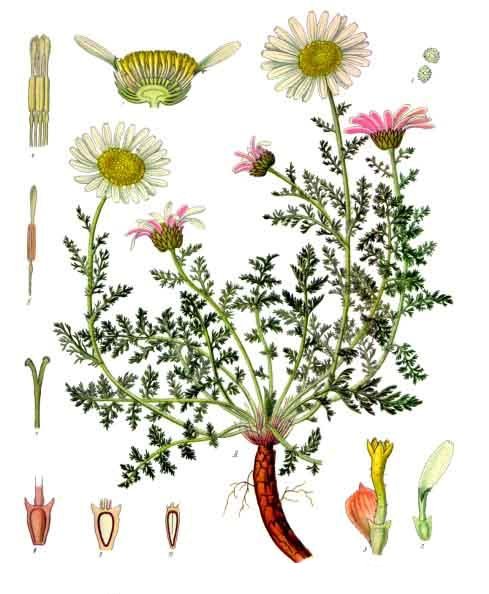
- Courtesy: Anacyclus_pyrethrum_-_Köhler–s_Medizinal-Pflanzen-011.jpg
-
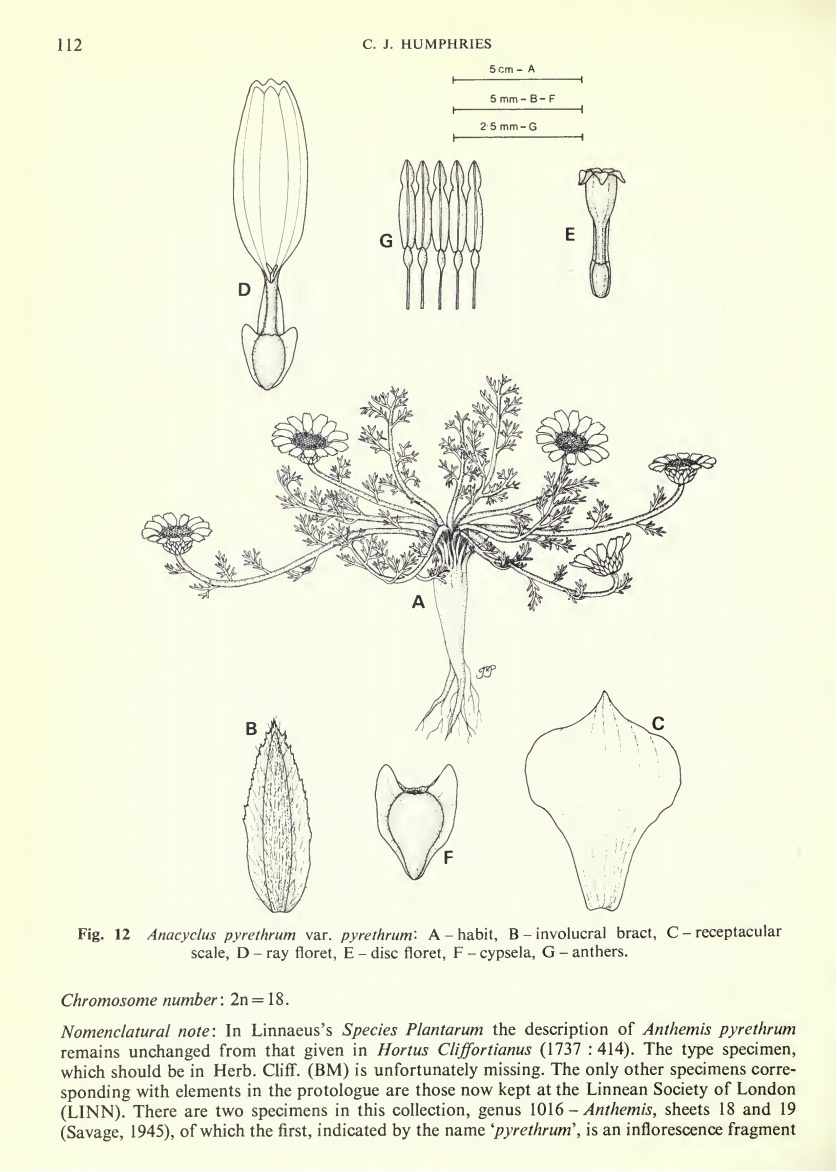
- Courtesy: http://temperate.theferns.info/plantimages/A/n/AnacyclusPyrethrum.jpg
-
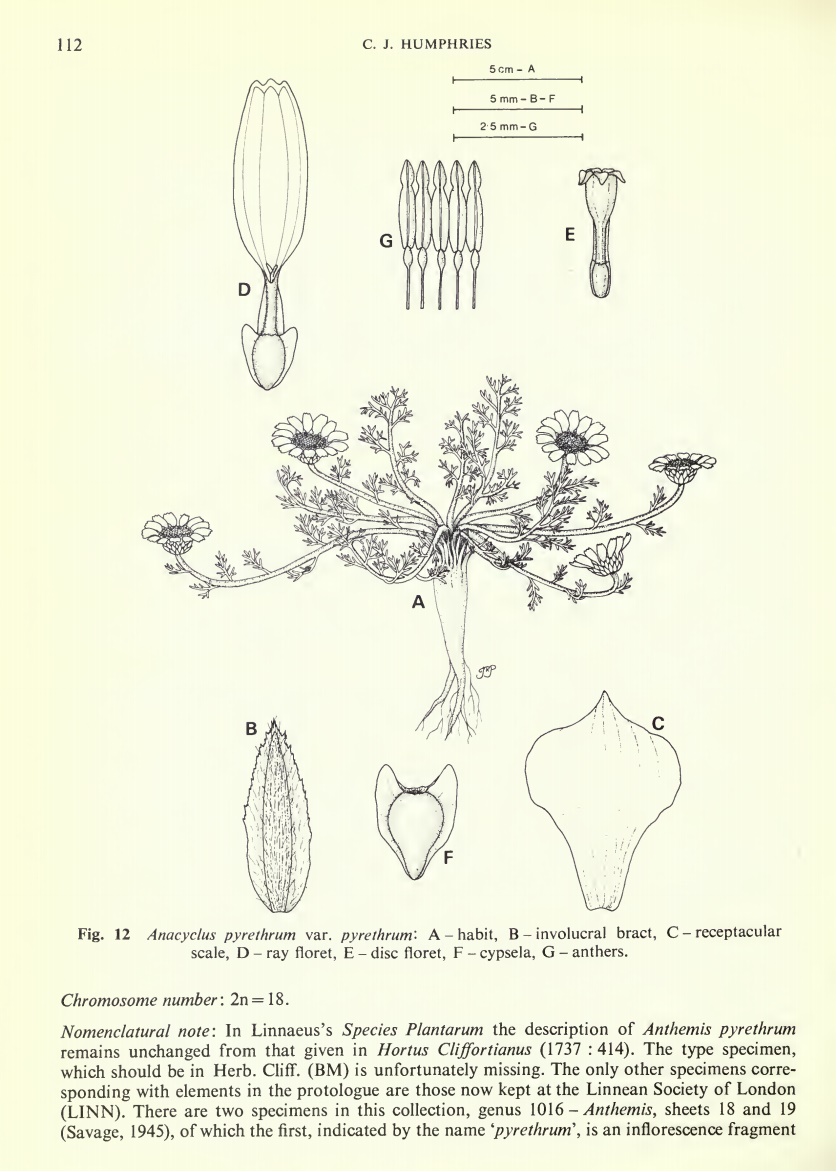
- Courtesy: http://temperate.theferns.info/plantimages/A/n/AnacyclusPyrethrum.jpg
-

- Courtesy: https://herbalveda.co.uk/wp-content/uploads/2016/10/AKAR_-_SEPERATE-1.jpg
-

- Courtesy: https://herbalveda.co.uk/wp-content/uploads/2016/10/AKAR_-_SEPERATE-1.jpg
- » Classification and names of akarakarabha
- » Synonyms and definitions of akarakarabha
- » Drug Properties of akarakarabha
- » Chemical Constituents of akarakarabha
- » Standardization of akarakarabha
- » Parts used and Dosage of akarakarabha
- » Morphology and Histology of akarakarabha
- » Distribution and Conservation of akarakarabha
- » Cultivation of akarakarabha
- » akarakarabha in the market
- » Medicinal Uses of akarakarabha
- » Researches and clinical trails of akarakarabha
- » akarakarabha in other sytems of medicine
- » Ayurvedic formulations with akarakarabha
- » Images of akarakarabha

Website Administrator
This article is incomplete. If you feel you can make a contribution, please let us know by sending email to mail@ayushvedah.com, we may consider your request. Thank you.