
vasuka :
 Spermacoce hispida Linn is one of the important plant belonging to the family of Rubiaceae and is commonly used herb in siddha medicine.The plant extracts contains phytochemical constituents such as of saponins, tannins, phenolics, steroids, essential oils, flavonoids and terpenoids. The chemical entities of this plant have been used as an antidiabetic, anti-hypertensive, hepatoprotective, anti-inflammatory, antihyperlipidaemic, analgesic, antifungal, anticancer and antioxidant properties
HISTORICAL AND MYTHOLOGICAL REVIEW:
It is suggested that it remove signs of old age, purify blood and improve vitality and has been used by the tribal’s living in the forest regions in the Western Ghats of Kerala since ancient timesTaxonomical Classification
Kingdom: Plantae - Plants
Division: Magnoliophyta - Flowering plants
Class: Magnoliopsida - Dicotyledons
Family: Rubiaceae
Genus: Borreria
Species: Borreria hispida
Allied species:
S. mauritiana O. Gideon., S. stricta L. and S. ocymoides Burm.VERNACULAR NAMES
Sanskrit: Vasukah, Buka ,MadanghantiEnglish: Shaggy button weed
Hindi: madanaghanti
Telugu: madana, madana budatha kaada, madana kaada, madana kattu, madana-ghettu, madanaghanti, madanagrandhi, madanagranthi, modina, madanabudata
Bengali: Madchbuntkadu
Marathi: gedo, ghamtachi-bhaji
Oriya: Solaganthi.
Gujarathi: Madhur Zadi, Khar Sar shekh lou
Tamil: Nathaichuri
Malayalam: Tartaval, Kudalchurukki, Nattachuri;
Kannada: daare botu, daare kaddi, madana buddame gida, madana ganti, madanabadu, madanaganti, megidda, nn
Santal: Pitwara
Chinese: 糙叶丰花草 cao ye feng hua cao
Sinhalese: Heen getakola
Varities:
सितो रक्तो द्विधा प्रोक्तो (Rajanighandu)
Two types red stem & white stem
White steamed one rasayana
Definition
वसुक
Synonyms
Synonyms in Ayurveda: Vasukah, BukaBuka
Rasa: Katu Tikta
Guna: Laghu
Veerya: Ushna
Vipaka: Katu
Karma: Pittahara Vatahara
Spermacoce hispida Linn has been extensively used in Siddha system of medicine for various conditionsincluding decreasing the blood sugar levels. In traditional medicine, Spermacoce hispida is used to heal stomach ailments and also used as tonic and anti dandruff. The Flowers have been applied to boils, eruptions, swellingsand also regarded as an emetic and as a remedy for coughs and malaria. The plant under study has been used since ages by folk because of its rich medicinal values.
Cultivation:
B. hispida occurs behind beaches, in dry gardens, teak forests, along steep roadsides, on sandy soils, locally abundant, from sea-level up to 500 m altitude.Propogation:
SeedHarvesting:
Flowering & Fruiting: May-AugustPhytochemistry:
- Methanolic extract yielded flavonoids and amino acids.
- Various extracts of whole plant yielded alkaloids, carbohydrates and glycosides, phytosterols, fixed oil and fats, saponins, phenolic compounds and tannins, protein and amino acid, coumarins, and flavonoids.
- Various extracts of seed oil yielded saponins, tannins, phenolics, steroids, essential oil, flavonoids, and terpenoids, with an absence of alkaloids, glycosides and carbohydrates. Seed oil content was 43.60% in the petroleum ether extract and 19% in the methanol extract.
PHARMACOLOGY:
Important formulations1. Murivenna
Parts used for medicinal purpose
Leaves, Seed, Whole plant, ,Dosage:
Root powder- 5GDecoction- 30 ml
Substitute:
Seeds have been recommended as a substitute for coffeeAdultrants:
S. mauritiana O. Gideon., S. stricta L. and S. ocymoides Burm.Controversy:
There is some disagreement over the correct name for this species.Commercial value:
All the parts of the plant have an ethno medicinal importance, It has been also reported that Spermacoce hispida is an effective natural drug for the treatment of hypertension and it has hepatoprotective, anti-inflammatory and antioxidant properties. Recently, pharmacological studies have shown that Spermacoce hispida seeds exhibit antidiabetic properties and Antihyperlipidaemic activity in rats.Morphology:
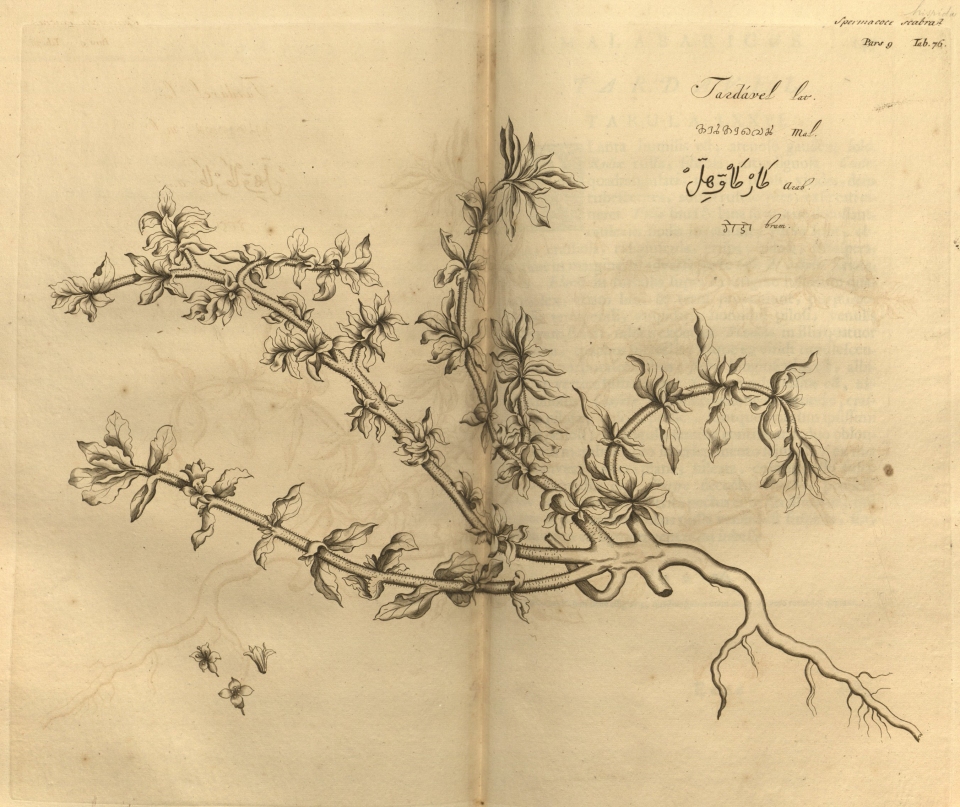
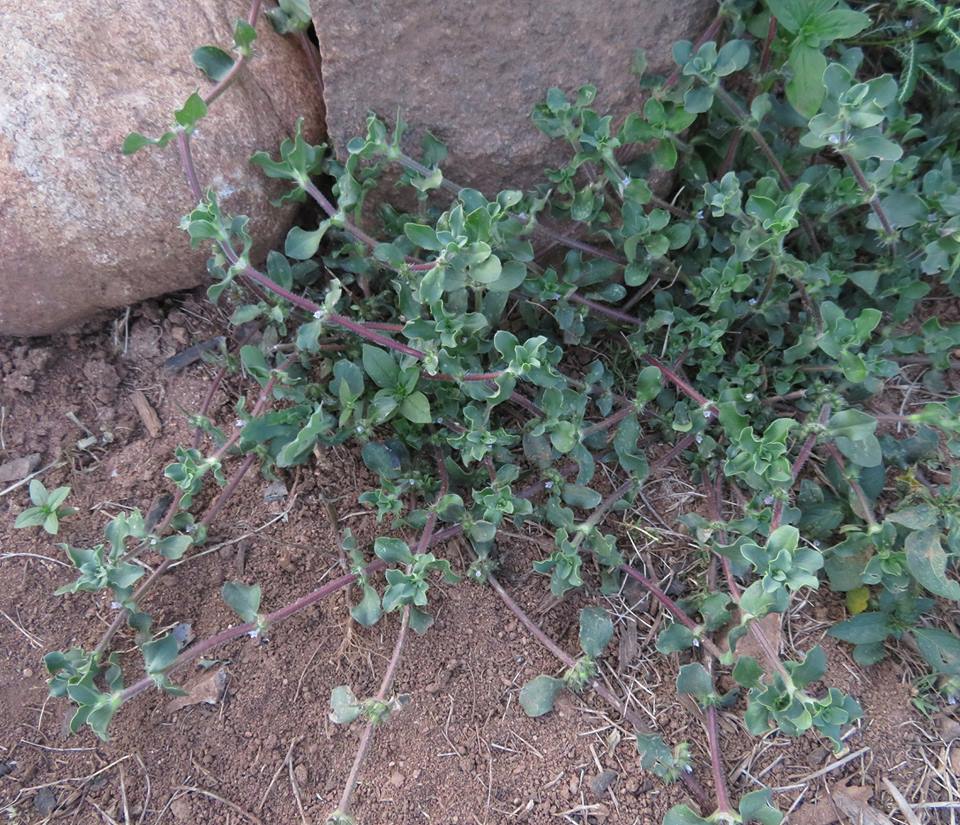
Herbs, annual or perennial, or subshrubs, prostrate to perhaps weakly ascending, apparently often fleshy, to 50 cm tall; stems subterete to usually markedly quadrate, glabrous to puberulent or pilosulous on sides, angles cartilaginous to winged, wings to 0.1 mm wide, ciliolate, hispidulous, or ciliate. Leaves sessile to shortly petiolate; petiole to 4 mm, hirtellous throughout or ciliolate in lines; blade drying papery to leathery, oblong-elliptic, obovate, or spatulate, 10-30(-40) × 5-15(-18) mm, both surfaces hirtellous to scaberulous, hispidulous, and/or hirsute, base cuneate to obtuse and usually long decurrent, margin scaberulous or ciliolate and often revolute, apex acute, obtuse, or rounded; secondary veins 2 or 3(or 4) pairs or not visible; stipules moderately to densely puberulent, hirtellous, and/or pilosulous often in lines, sheath 1-3 mm, with 5-7 bristles 1-5 mm. Inflorescences axillary, 5-15 mm in diam., with 1-6 flowers per axil; bracts linear or infrequently stipuliform, 1-5 mm. Calyx puberulent to hirtellous or scaberulous; hypanthium portion ellipsoid, 0.8-1 mm; lobes 4, linear-lanceolate to narrowly triangular, 1-1.5 mm, ciliolate or ciliate. Corolla pink, purple, or white, funnelform, outside glabrous or hispidulous to pilosulous on upper part; tube 2.5-4.5 mm, glabrous in throat; lobes elliptic-oblong, lanceolate, or triangular, 1-1.8 mm. Capsules ellipsoid to subglobose, sometimes weakly flattened perpendicular to septum, 2.5-5 × 2.5-3.5 mm, puberulent, hirtellous, pilosulous, and/or hispidulous, papery to cartilaginous, septicidal from apex with valves usually remaining connected at base then both valves loculicidal through septum, with calyx lobes sometimes enlarging, up to 2.2 mm; seeds black, elliptic to elliptic-oblong in outline, 2.2-3 mm, obtuse at both ends, shiny to dull, surface minutely granular or dimpled. Fl. and fr. Mar-Dec.Histology:
Transverse section of midrib
The characters of transverse section (TS) of midrib with lateral extensions of the lamina on its either sides All the species were dorsiventral in nature, plano convex shaped with a depression on middle of dorsal side. Detailed TS showed rectangular shaped upper and lower epidermis. Lamina showed two layers of palisade parenchyma underneath the upper epidermis and 3 to 5 rows of spongy parenchyma were found beneath palisade layer. The rest of the midrib was occupied by the cortical parenchyma with collateral vascular bundle embedded in the middle. Xylem was towards center and phloem towards periphery. Parenchymatous tissue was thin walled with prominent intercellular spaces.
S. hispida has shown variation in size of epidermal cells and number of epidermal cells as compared to other species. Trichomes were absent in S. hispida and were present in other species. The lower epidermal cells were irregular shaped with wavy margin in all species, S. hispida has shown variation in size of epidermal cells and number of epidermal cells as compared to other species. Trichomes were present in S. hispida and S. mauritiana and were absent in other two species. All species possessed Rubiaceous (paracytic) stomata in both upper and lower epidermal layer.
Geographical distribution:
E. Asia - southern China, India, Malaysia, Indonesia, Philippines.ECOLOGICAL ASPECT:
Open sandy lands at lower elevations in southern China
Behind beaches, in dry gardens, teak forests, along steep roadsides, on sandy soils, locally abundant, at elevations from sea-level up to 500 metres
Plant conservation:
Not Evaluated (NE)General Use:
Plant pacifies vitiated vata, pitta, arthritis, colic, dyspepsia and general debility. Its decoction is used for rapid evolution of uterus after parturition.Therapeutic Uses:
A decoction of the root is used as an alterative
The decoction is also used as a mouthwash for toothache
The seeds are considered cooling and demulcent, and are given in the treatment of diarrhoea and dysentery
Systemic Use:
The plant is considered to be emetic
The aerial parts of the plant are taken as a febrifuge
and are also considered to be stimulant and tonic
Externally, the leaves are applied in poultices to treat headache - they appear to have a cooling effect on the head and so allay the pain somewhat
They are also used as a poultice on wounds and sores
A decoction of the leaves is considered an astringent and used to treat haemorrhoids
Administration:
Recently it is found that this herb contains Calcium and Phosphorus in abundance hence administration of this drug in form of chooranam or kudineer (decoction) is recommended in conditions like bone diseases, fractures etc.Pharmacological:
Roots possess properties similar to sarsaparilla.
- Considered alterative, tonic, cooling, demulcent, aphrodisiac, constipative.
- Used as antieczemic, antibacterial, antidiarrheal, antidysentery.
Clinical trials:
1. Potential Role of Borreria hispida in Ameliorating Cardiovascular Risk Factors / HR Vasanthi, S Mukherjee, I Lekli, D Ray, G Veeraraghavan, DK Das / J Cardiovasc Pharmacol. 2009 Jun;53(6):499-506.
2. EVALUATION OF ANTIBACTERIAL ACTIVITY OF VARIOUS EXTRACTS OF WHOLE PLANT OF Borreria hispida (Linn) / A. Kottai Muthu et. al. / International Journal of Pharma Sciences and Research (IJPSR) Vol.1(2), 2010, 127-130
3. In- vitro antioxidant studies of various extracts of whole plant of Borreria hispida (Linn) / C.D.Shajiselvin, A.Kottai Muthu / RJPBCS Volume, 1 Issue 2 Page No. 17, April – June 2010
4. Pharmacognostical and Proximate Analysis of Leaves of Borreria Hispida. / A J Ptel, Patel Jatin, Macwan Carol, Patel Mayuree, Soni Arun / Asian Journal of Biochemical and Pharmaceutical Research Issue 2 (Vol. 1) 2011
5. Isolation Of Active Components Derived From Whole Plant Of Borreria hispida (Linn.) / C.D .Shaji Selvin1, A. Kottai Muthu*and D.Satheesh Kumar / International Journal Of Ayurvedic And Herbal Medicine 2:2 (2012) 240:247
6. Induction of Apoptotic Effects of Antiproliferative Protein from the Seeds of Borreria hispida on Lung Cancer (A549) and Cervical Cancer (HeLa) Cell Lines / S. Rupachandra and D. V. L. Sarada / BioMed Research International, Volume 2014 (2014) / http://dx.doi.org/10.1155/2014/179836
Research:
1. An Acute Oral Toxicity Study of Seeds of Spermacoce Hispida Linn, in Albino Wistar Mice as Per OECD Guidelines 425 / Dhevi R*, Elango V, Gayathri K, Mohamed Shabi M / AJPHR
2. PHYTOCHEMICAL SCREENING STUDY AND CONSTIPATION ACTIVITY OF SPERMACOCE HISPIDA L. (RUBIACEAE) BY USING ALBINO RATS / Muthuboopathi, G.; Padmalatha, K.; Sundar, S.; Poojitha, K.; Hindu Addala, V. / International Journal of Pharmaceutical Sciences & Research;Dec2013, Vol. 4 Issue 12, p4669
3. HEPATOPROTECTIVE ACTIVITY OF ETHANOLIC EXTRACT OF SPERMACOCE HISPIDA.LINN AGAINST CARBON TETRACHLORIDE (CCl4) INDUCED HEPATOTOXICITY ON ALBINO WISTAR RATS. / M.Karthikeyan*,Wawdhane S.S.,
M.Kannan, S.Rajasekar / INTERNATIONAL JOURNAL OF PHARMACEUTICAL RESEARCH AND DEVELOPMENT, January - 2011, Vol 2, Issue 11, Article 6
4. EFFECT OF SEEDS OF SPERMACOCE HISPIDA LINN ON MITOCHONDRIAL ENERGY PRODUCTION IN ISOPROTERENOL INDUCED MYOCARDIAL INFARCTED RATS / R. Dhevi*, V. Elango / IAJPR. 2015; 5(8): 2531-2535
5. ANALGESIC ACTIVITY OF AQUEOUS EXTRACT OF SPERMACOCE HISPIDA IN MICE / Vinayak Meti , Chandrashekar K , Shishir Mishra
Precautions:
Seek medical advice for its use during pregnancy.Toxicity studies:
There are no known side effects with this herb.Use in other system of medicine:
Culinary
- In the Konkan, the plant is eaten with other herbs as vegetable.
Folkloric
- In the Philippines, leaves are brewed in decoction and used as astringent for hemorrhoids.
- In Martinique, plant is used as tonic and stimulant. Also used for hemorrhoids.
- Leaves applied to the head in cases of headache, with it cooling effect, somewhat allaying the pain.
- The seeds in confection are cooling and demulcent; used for dysentery and diarrhea.
- Seeds considered by some as aphrodisiac.
- Used as alternative therapy for diabetes.
- In Siddha medicine, seeds used to cure diarrhea; roots used as tonic.
- In Tamil Nadu, India, paste made from crushed seeds used to treat stomach problems. In India, plant decoction used for headache and seeds used as stimulant and for treatment of internal injuries of the nerves and kidney.
- Used for headaches, constipation, hypertension, scabies, IBS, erysipelas, mouth ulcers, abscesses, and as antifertility medicine.
- In Ayurveda, used as antioxidant, contraceptive, stomachic, emollient; vapor of plant inhaled to kill tooth worms. Leaf decoction used for piles, diarrhea, dysentery. Leaf paste applied to head for cooling effect.
CONCLUSION:
Spermacoce hispida is an annual to perennial, variable, creeping to erect, branched, short hairy herb, growing up to 15 cm tall.
The plant is used in traditional medicine in southeast Asia, the plant being harvested from the wild. It is also used as a vegetable in Sri Lanka, where it is sold in local markets
The plant is considered to be emetic. It has been also reported that Spermacoce hispida is an effective natural drug for the treatment of hypertension and it has hepatoprotective, anti-inflammatory and antioxidant properties. Recently, pharmacological studies have shown that Spermacoce hispida seeds exhibit antidiabetic properties and Antihyperlipidaemic activity in rats.
Photos of vasuka - ,
-
- Courtesy: http://tropical.theferns.info/plantimages/e/e/ee3194aa4d065f2f0b5e98f515bd9345292c3d63.jpg
-

- Courtesy: https://www.indianmedicinalplants.info/herbs/index.php/dr-ajayan-sadanandan-s-articles/1350-spermacoce-hispida
-

- Courtesy: https://www.indianmedicinalplants.info/herbs/index.php/dr-ajayan-sadanandan-s-articles/1350-spermacoce-hispida
-
- Courtesy: https://www.indianmedicinalplants.info/herbs/index.php/dr-ajayan-sadanandan-s-articles/1350-spermacoce-hispida
-

- Courtesy: http://plantillustrations.org/illustration.php?id_illustration=127659&SID=0&mobile=0&code_category_taxon=9&size=1
-

- Courtesy: http://plantillustrations.org/illustration.php?id_illustration=162178&SID=0&mobile=0&code_category_taxon=9&size=1
- » Classification and names of vasuka
- » Synonyms and definitions of vasuka
- » Drug Properties of vasuka
- » Chemical Constituents of vasuka
- » Standardization of vasuka
- » Parts used and Dosage of vasuka
- » Morphology and Histology of vasuka
- » Distribution and Conservation of vasuka
- » Cultivation of vasuka
- » vasuka in the market
- » Medicinal Uses of vasuka
- » Researches and clinical trails of vasuka
- » vasuka in other sytems of medicine
- » Ayurvedic formulations with vasuka
- » Images of vasuka

Website Administrator
This article is incomplete. If you feel you can make a contribution, please let us know by sending email to mail@ayushvedah.com, we may consider your request. Thank you.
- Comments
- Add photo


